Do you have to write an essay?
Are you stuck for ideas?
Have no fear. Here’s a strange way to get ideas for essays: Use your initials.
Read MoreDo you have to write an essay?
Are you stuck for ideas?
Have no fear. Here’s a strange way to get ideas for essays: Use your initials.
Read More
It is hard to believe, but the word “everyone” is singular.
It sounds as though it should include a lot of people; in fact, it should include everyone—and that sounds plural.
But “everyone” is in the list of singular indefinite pronouns, which are listed here: each, every, either, neither, no, one, no one, everyone, someone, anyone, nobody, everybody, somebody, anybody, nothing, everything, something, anything.
I grouped them by their endings: -one, -body, and -thing. You also could list most of them by their beginnings: no-, every-, some-, and any-.
This week’s blog, which is another in a series of grammar tutorials, includes the following:
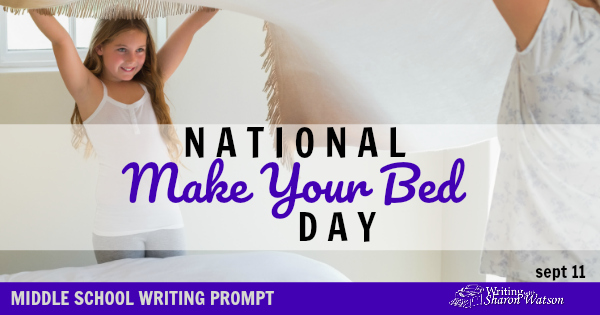
National Make Your Bed Day is September 11. Why it is on the same day as National Patriot Day, I’ll never know, and if you’d rather do that prompt, here it is.
Being able to explain how to do something is an important skill. Have you ever explained to an adult how to do something on their computer or smart phone? Or taught a younger kid how to tie shoes or ride a bike?
Read More
Welcome to yet another of biting, incisive grammar question like this one: “Mom, is this sentence supposed to have one question mark or two at the end?”
If you’re dying to know what the other grammar tutorials are about, click here for one on punctuation in dialog. (Tarzan and Jane help out on that one.)
I’m fully aware that the heading “End Punctuation” could be the heart’s cry of your struggling students.
However, this week, your students will wrestle with the thorny problem of what to do if a sentence is a question (interrogative) but there’s already a question mark to the left of the end quotation mark.
Take a look at the infographic, which is the lesson.
Read More
Would you like to be a gurgitator?
Miki Sudo is a speed eater or a gurgitator, someone who eats competitively. According to the August 2014 issue of mental_floss magazine, this petite woman “entered her first food challenge less than three years ago on a whim.”
It took her 33 minutes and 12 seconds to eat
Read More
Welcome to the third in a series of grammar tutorials! You can find the first one on commas in compound sentences here.
The second one teaches the position of commas, periods, colons, and semicolons when used with quotation marks. What could be more exciting?!
Do you have students who love to hide in their bedrooms and write story after story?
Most likely, they are hoping to be published one day, their stories read and loved by millions, their names on the covers of sought-after books.
One thing editors look for in a new writer is proficiency in grammar and punctuation. Granted, it’s not a huge thing; it’s more important to know how to write a great story. But grammar is an indicator of how well the writer knows the language and its conventions, and it is something that editors take into account when determining whom to publish.
Let’s make sure our students have access to the skills they need to get published.
A tiff between Tarzan and Jane in this fun tutorial will guide your students through the punctuation-in-dialog jungle.
Read More
This compelling grammar lesson answers such thorny questions as this one: “Mom, does a period go before or after the last quotation mark?”
You can find the first in the series of grammar tutorials here; it’s all about compound sentences, coordinating conjunctions, and commas. And if that doesn’t create some excitement in the classroom, I don’t know what will.
This week’s tutorial includes the following:
There are only two rules (can you believe it?), and they are easy (again, is it to be believed?).
This lesson does not cover quotation marks in dialog. Tarzan is in charge of that here.
As you’ll notice by the infographic,
Read More
In The Giver by Lois Lowry, young Jonas becomes the Receiver of Memories. Because his people control the weather, he’s never seen snow. The first cultural memory transmitted to him from The Giver is of snow.
Here’s how Lois Lowry writes Jonas’s first encounter with the idea of snow. Notice how she uses many senses to communicate snow’s feel to readers:
Read More
Okay, so the title of today’s article isn’t the most exciting. In fact, you might find it downright boring—or intimidating.
I’ve been known to zone out when my husband tries to explain football lingo and rules to me. My eyes glaze over. My ears stop working. The same might be true for your students and the subject of commas.
You can use the infographic below to teach students when to use commas in a compound sentence that is joined by a coordinating conjunction.
In this tutorial, you’ll find the following goodies:
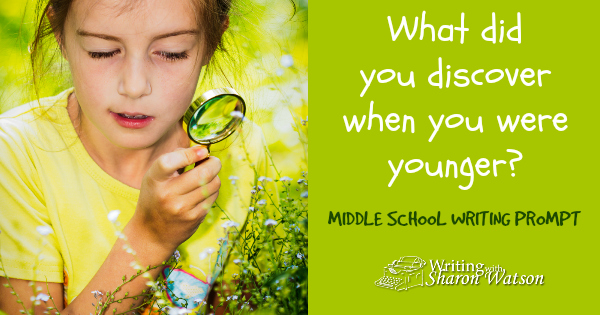
There’s an advantage to being very, very young. I’m talking about younger than you are now.
When you’re really little, you discover new things all the time, things that seem old or boring to you now. Everything is amazing; everything is new.
The following is a passage from The Joy Luck Club by Amy Tan. It’s about a woman remembering back to her youth, thinking about the first time she had discovered . . . well, I’ll let you read it:
Read More