Create a Character from a Photo
You want to create a character for your story, but you’re stuck. You can’t think of one. Use this trick to get you thinking about characters.
Proofreading is not easy, but we can make it a little easier for our students. Let them try these two proven methods of proofreading that professional writers use.
It’s easy for our students to make these common mistakes in persuasive writing. Here’s a practical list of three mistakes you can help them avoid. Then enjoy the writing activity that follows.
Introductions can be boring. Super boring. Learn how your students can powerfully engage their readers with this writing super power in their introductions.
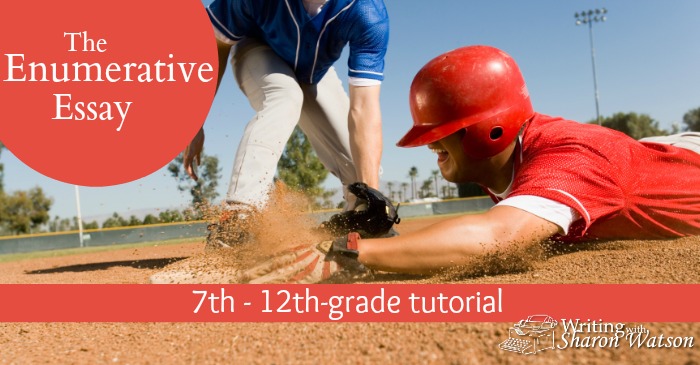
Enumerative essays, or partitive essays, begin with the number of parts (“There are nine ways to get to first safely”), and then each part becomes a paragraph in the body. The first paragraph in the body can explain how a hitter can whack the ball and get to first before anyone on the opposing team can catch the ball and throw it to first. The next paragraph can be about getting the hitter to first on a walk, and so forth.
You know that boring description in that last book you read for school? No, wait. You didn’t read it. You skipped the description because it was so dull. It’s time to fix that. Here’s a paragraph from H. G. Wells’ The War of the Worlds. Notice the specific and powerful verbs he uses to keep this description of refugees moving along:
There were sad, haggard women tramping by, well dressed, with children that cried and stumbled, their dainty clothes smothered in dust, their weary faces smeared with tears. . . . There were sturdy workmen thrusting their way along, wretched, unkempt men, clothed like clerks or shop-men, struggling spasmodically.

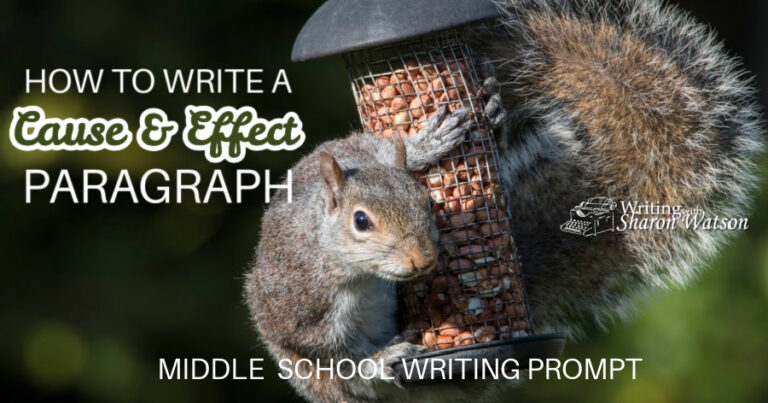
Students learn about a cause-and-effect essay when they examine why they didn’t finish their homework. Suitable for grades 5-8.